Over the last few months I've spoken with more than 100 companies about hiring in the age of AI. One thing came up in almost every conversation: the resume no longer tells you anything.
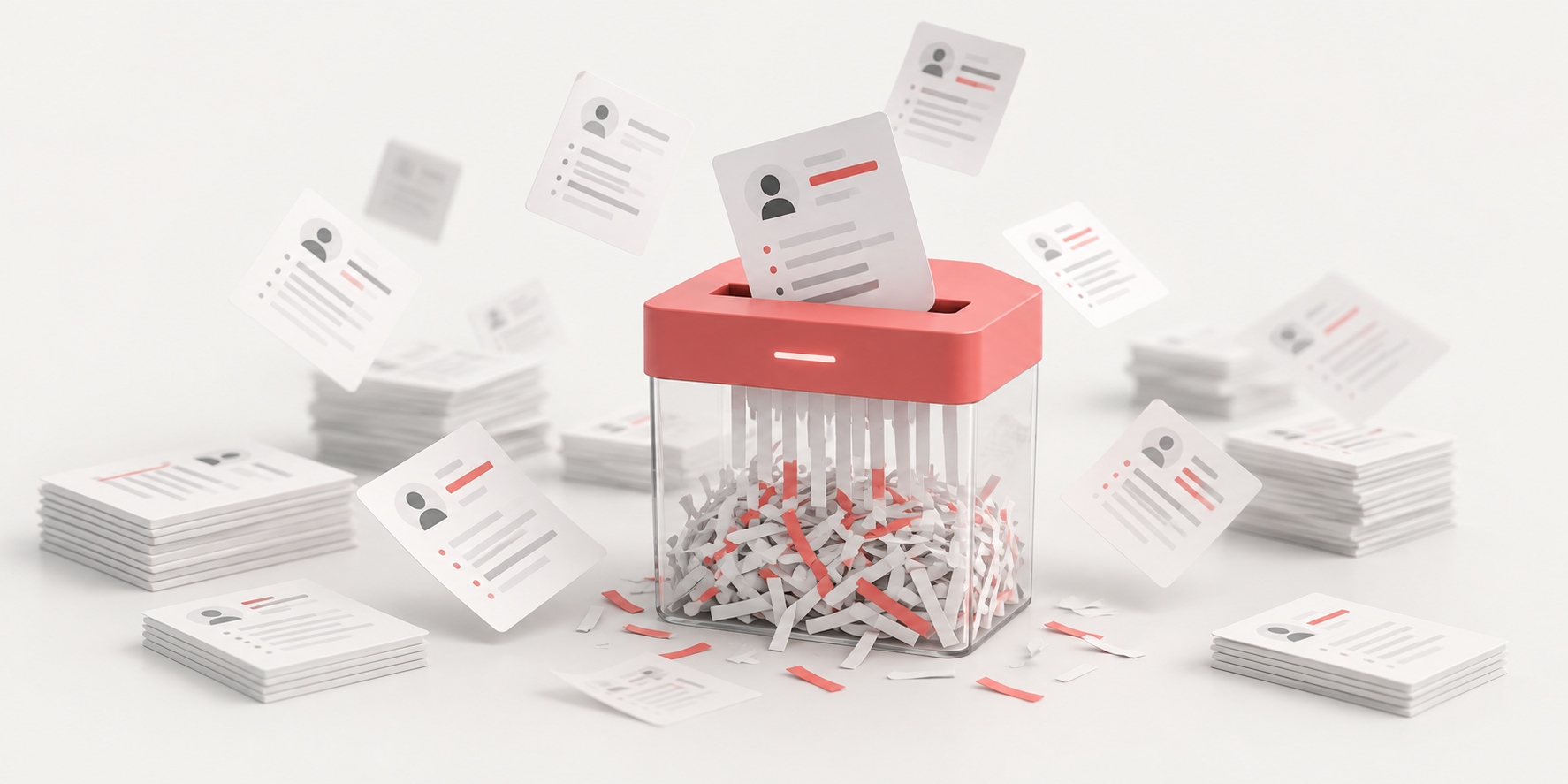
Across the companies we've spoken with, around 70% of applications are clearly AI-enhanced — rewritten to mirror the job description word for word and slip past ATS filters. Many aren't even real attempts. They're automated mass-apply spam.
Companies now receive hundreds, sometimes thousands, of applicants per role. The pipeline isn't a funnel anymore. It's noise.
So when everyone looks perfect on paper, how do you screen?
Screening has to move from claims to proof
A resume is a claim. So is a LinkedIn profile, a portfolio link, a list of technologies. For twenty years the industry treated claims as a cheap first filter and pushed verification later, into interviews. That worked as long as writing a convincing claim took effort.
It doesn't anymore. The cost of producing a perfect-looking application dropped to near zero, while the cost of verifying one stayed exactly where it was. That asymmetry is the whole problem. Every filter built on claims is now filtering noise.
Which means verification has to move to the front.
But what about cheating?
Every time I bring up assessments, the same objection comes back: candidates will just use an LLM to solve them.
They will. And I'd argue that's the wrong thing to worry about.
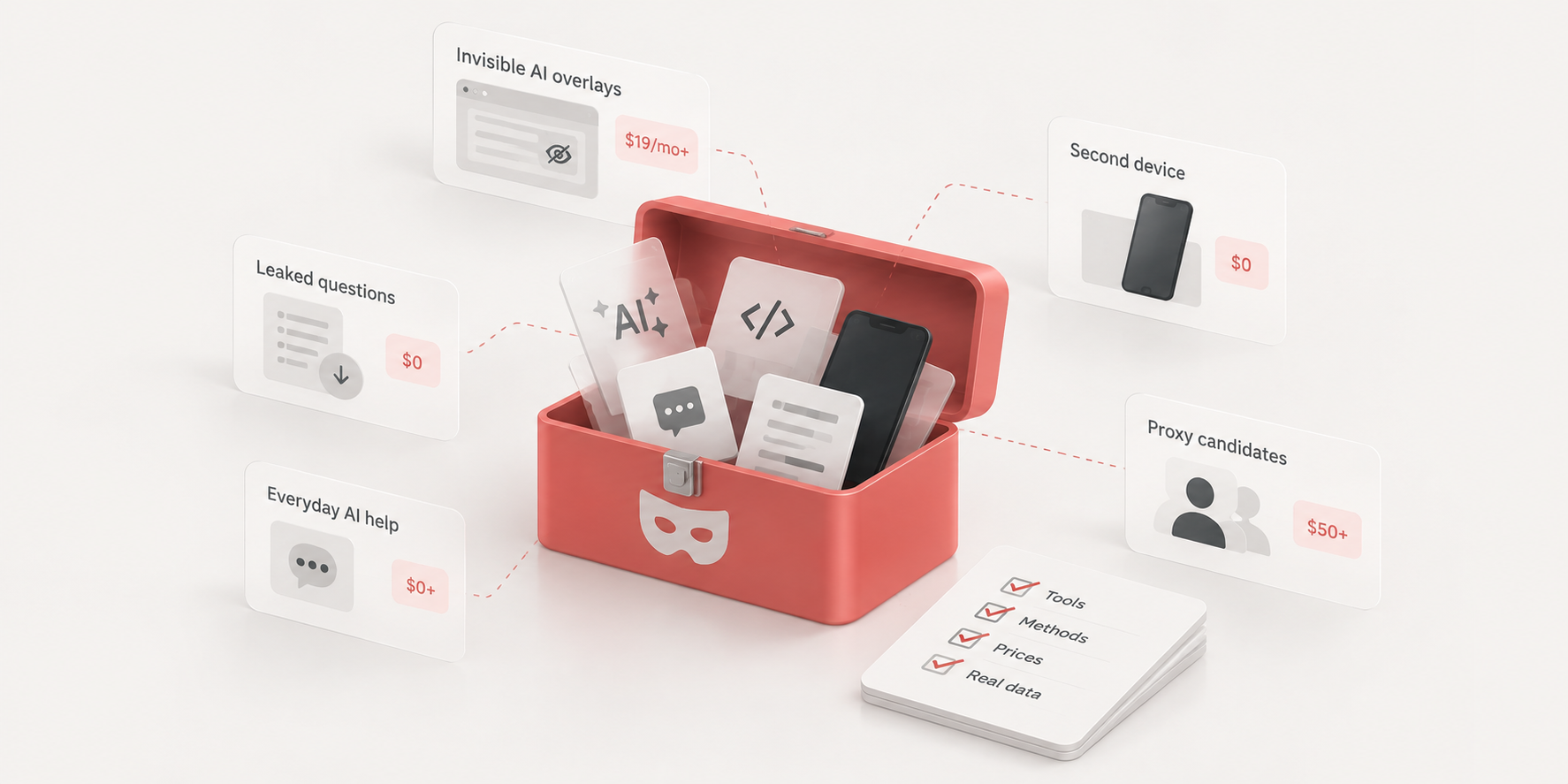
If using AI makes someone better at their job, they should use it. The people we're hiring will have AI on their desk from day one. Testing them in a sterile room with the tools taken away measures a job nobody does anymore.
The real challenge isn't detecting AI use. It's testing for reasoning.
- Why was this solution chosen?
- What trade-offs were considered?
- Can the candidate explain the thinking behind it?
Copy-pasting from an LLM isn't the issue. Not understanding the solution is.
And that difference is testable. You can't defend work you didn't do. Ask someone to walk through a decision they never made and it falls apart in about ninety seconds — not because they're caught, but because there's nothing underneath to explain.
So the question stops being "did you use AI" and becomes "how well do you use it, and do you understand what came out." One is surveillance. The other is a skill worth measuring.
The other side of the table
I've also spoken with a lot of candidates about how AI is changing job seeking. Two frustrations come up again and again.
The first: having to re-verify their skills from scratch for every single application. The same exercise, the same take-home, the same live coding round — proven ten times over, credited zero times.
The second: awkward AI interviews and generic skill tests that have nothing to do with the actual job. A one-size-fits-all quiz tells a candidate the company didn't think hard about the role, and it tells the company almost nothing back.
Add the silence on top. No replies. No feedback. Nothing.
Frustration compounds. People apply to 50, 100+ roles to increase their chances, because volume is the only lever they have left. And when they finally get into a process, many use AI to gain an edge.
It's not malicious. It's systemic. Both sides are responding rationally to a broken system, and both responses make it worse.
Trust is the thing that broke
The tooling used for screening and assessment simply hasn't caught up with AI. Until it does, both sides keep optimising against each other: companies add filters, candidates add automation, and the signal gets thinner every cycle.
The way out isn't better detection. It's building the proof into the process — evidence of real work, and a conversation that tests whether the person behind it actually understands it.
That's what we're building at Tendent. More on how it works in the next post.